Subscribe: Email | TuneIn | RSS | More
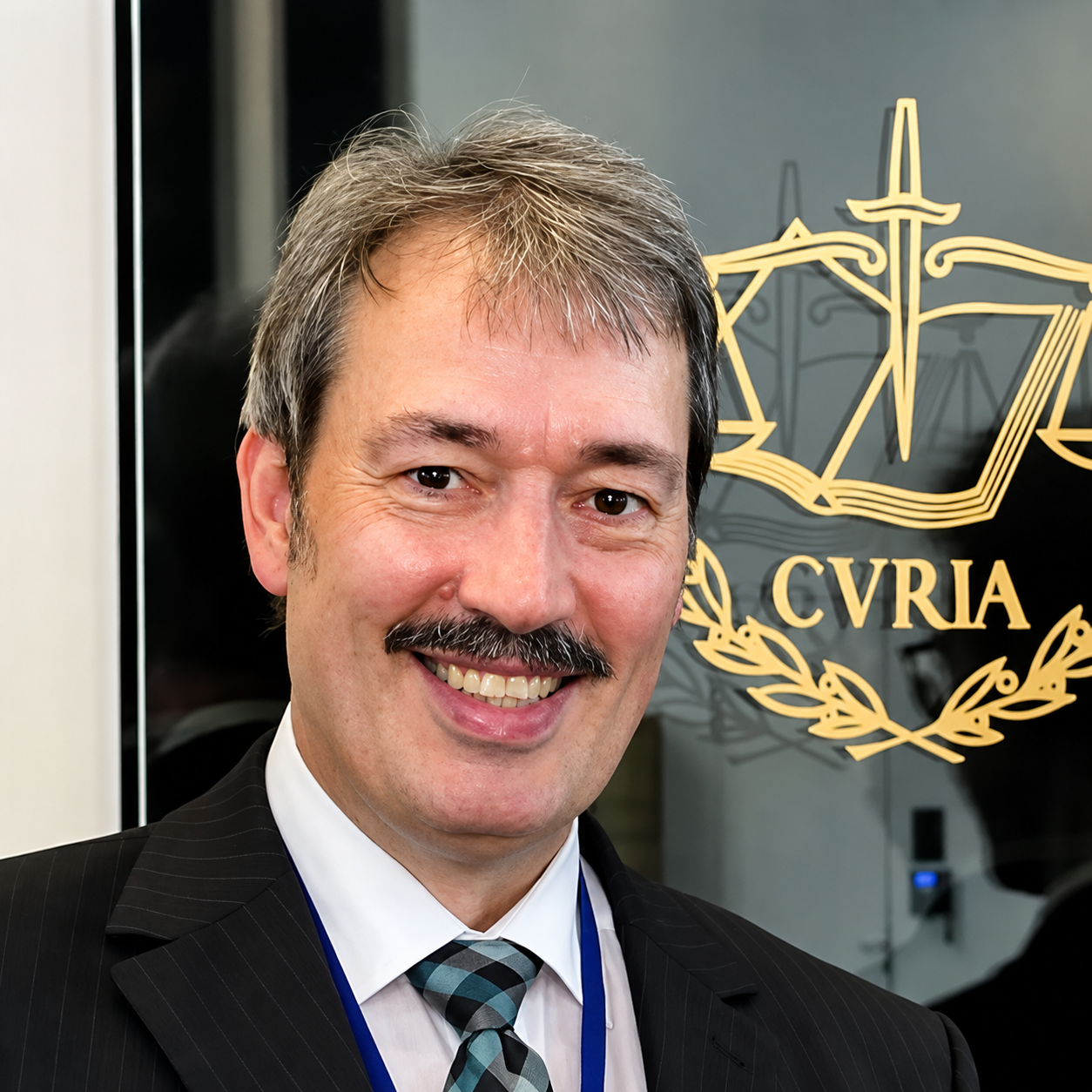
I am Rolf Claessen and my co-host Ken Suzan and I are welcoming you to episode 177 of our podcast IP Fridays! Today’s interview guest is Dr. Ernst-Peter Heilein, who is a German and European patent attorney, the founder of HEILEIN IP LAW, and a long-time IP leader at BSH Home Appliances. He is the mastermind behind the BSH v. Electrolux decision of the European Court of Justice about long-arm jurisdiction in Europe that has the whole patent world stirring in Europe at the moment!
But before we jump into this fascinating interview, I have news for you!
Emboline v. AorticLab (UPC Court of Appeal)
The UPC Court of Appeal has clarified for the first time how a conditional revocation counterclaim should be handled, in a dispute over Emboline’s embolic protection patent EP 2 129 425 against AorticLab. A defendant can validly make its revocation counterclaim conditional on infringement being found first, meaning no ruling on the counterclaim is needed if the infringement claim fails, as the Munich Local Division had held. The Court of Appeal also closed a related gap: if the claimant appeals a non-infringement finding, the counterclaimant may conditionally appeal the unresolved counterclaim too. AorticLab missed its own appeal deadline and can now at best seek re-establishment of rights, while Emboline has already appealed the non-infringement finding.
FujiFilm v. Kodak (UPC Court of Appeal)
Following the closely watched long-arm jurisdiction ruling of June 2, the UPC Court of Appeal, chaired by Rian Kalden, has now granted FujiFilm an injunction against Kodak in a second proceeding. The Court upheld the limited printing plate patent and found that Kodak’s Sonora XTRA 3 plate infringes it. Kodak can no longer sell or use that plate in Germany.
OpenAI v. EUIPO (General Court of the EU, T-555/25)
The General Court’s Eighth Chamber dismissed OpenAI’s action against the EUIPO decision to partially cancel the OPENAI trademark. The partial refusal for classes 9, 42, and 45 rests decisively on Article 7(1)(c) EUTMR, the descriptiveness ground. For a significant part of the English-speaking public, “OPENAI” directly conveys that the goods or services are provided using freely accessible artificial intelligence.
Dental Monitoring v. Align Technology (CAFC)
On July 7, 2026, the Federal Circuit confirmed that AI and deep-learning patent claims covering dental image analysis are not patent-eligible under Section 101. Simply training a “deep learning device” on a specific dataset does not amount to a patent-eligible technical solution.
Publisher v. Google (Munich I Regional Court)
The Munich I Regional Court issued a preliminary injunction barring Google from spreading false factual claims about a publishing company in its AI Overviews. A search query combining the company’s name with the German term for “fraud scheme” had triggered an AI-generated summary containing entirely fabricated accusations of subscription traps.
KPN v. Oppo (Federal Court of Justice, X ZR 103/24)
On July 1, the Federal Court of Justice dismissed KPN’s appeal against the revocation of a central claim of its LTE patent EP 2 291 033. Oppo had successfully challenged the claim, leaving KPN’s infringement action against Oppo’s German distribution entity without a legal basis for now.
BSH v. Electrolux: What the ECJ Ruling Means for Your Company’s Patent Enforcement Strategy
A vacuum cleaner from 2001 has reshaped the European patent landscape. That sounds like an overstatement. It isn’t. For IP Fridays, I spoke with Dr. Ernst-Peter Heilein, founder of HEILEIN IP LAW and long-time Senior IP Leader at BSH Home Appliances. He guided the case BSH v. Electrolux from its first strategic idea all the way to the Grand Chamber of the European Court of Justice, a case that earned the 2025 Managing IP Award as “Europe Impact Case of the Year.”
For managing directors, IP heads, and R&D leaders at German Mittelstand companies, this case is not a legal footnote. It changes where you can enforce your patents, and it changes where you yourself can be sued if your company operates across several European markets. That is what this article is about.
Background: How a Patent Dispute Became an ECJ Case
The invention dates back to 2001 and concerns a new vacuum cleaner technology. In 2006, BSH identified what it believed was an unauthorized use of that invention and contacted Electrolux to clarify the situation. The European patent was granted in 2009 and validated in a number of European countries. Nobody, Heilein says, could have imagined at the time that this matter would eventually reach the Grand Chamber of the European Court of Justice almost twenty years later.
In late 2018, BSH successfully defended the patent through opposition and appeal proceedings before the European Patent Office. In 2019, the Higher Regional Court of Düsseldorf found that certain Electrolux vacuum cleaner models infringed the patent. A classic milestone win, the kind that occurs regularly in patent practice. Except the patent had been validated in many countries. Winning in Germany did not solve the enforcement problem everywhere else.
Heilein describes the starting point in very concrete terms: how do you enforce a patent that exists in many countries without filing a separate lawsuit in every single one? And how do you prevent claims from becoming time-barred while you work that out? Running parallel proceedings in multiple countries is not just legally complex. It consumes time, personnel, and money that a mid-sized company rarely has in that quantity to spare.
This is exactly where the real value of this case for you begins. From the outset, this was never an academic debate about jurisdiction. It was a question that every company holding rights in more than one country eventually faces: how do you enforce your rights efficiently without burning your budget on ten parallel proceedings?
Brussels Ia Regulation: The Underrated Article 4
While searching for a solution, the BSH team came across Article 4 of the Brussels Ia Regulation. The underlying idea is simple: a person can generally be sued in the country where that person is based. In the BSH case, that pointed toward the Swedish home court, because Electrolux is headquartered in Stockholm.
For a long time, this rule played no real role in patent practice. The widely held view was that cross-border patent litigation in Europe was effectively dead the moment a defendant challenged the validity of the patent. Anyone wanting to enforce a patent across several countries appeared to have no choice but to litigate country by country.
Heilein and his team questioned that assumption instead of simply accepting it. This is the point I find most instructive: challenging accepted assumptions in your own field is often the difference between a standard solution and a strategic one. In 2020, the team decided to file the action in Sweden, aware that they were looking at a possibility, not a guarantee.
Cross-Border Enforcement: The Three Questions Referred to Luxembourg
After Electrolux challenged the validity of the patents, the Swedish home court declared itself not competent to hear the case. BSH appealed, and the Swedish Court of Appeal agreed to refer three questions to the European Court of Justice.
The first question addressed the core problem: does a home court that would otherwise have jurisdiction over an infringement claim lose that jurisdiction simply because the defendant argues the patent is invalid?
The second question concerned a feature common to many legal systems, including Germany’s, where infringement and validity are decided in separate proceedings.
The third question originally concerned Turkey. Today, most people immediately think of the United Kingdom, and some even think of US patents. Originally, the question was simpler: do the same jurisdiction rules apply to patents from countries outside the European Union?
The fact that the ECJ first assigned the case to a Chamber of seven judges and later referred it to the Grand Chamber of 15 judges already signaled how much weight the Court placed on these questions.
The Judgment: What the ECJ Actually Decided
A home court does not automatically lose jurisdiction simply because the defendant argues the patent is invalid. For many years, the opposite was widely assumed to be settled law. The ECJ made clear that this reading was too narrow. The court where the defendant is based can generally continue to hear the infringement case.
One point matters for how you read this ruling: questions concerning the validity of a European patent still fall to the national courts of the country for which the patent was granted, as provided in Article 24(4) of the Brussels Ia Regulation. What is new is that the infringement case does not automatically collapse the moment validity is challenged. The home court keeps control of the overall proceeding.
For patents from EU Member States, the home court does not automatically lose jurisdiction. It assesses the validity challenge. If it looks strong, the home court may stay the infringement case. If it looks weak, the home court may proceed. For patents from non-EU countries, the home court may stay the case if a validity proceeding is already pending there, drawing on Articles 33 and 34 of the Brussels Ia Regulation. The result is a considerably more flexible system than most observers expected
.
Patents from Outside the EU: Long-Arm Jurisdiction
The part of the judgment with the greatest international reach concerns patents from countries outside the EU. The ECJ ruled that the special jurisdiction rule for patent validity generally does not apply to non-European patents. That means the general rule can apply instead, opening the door for infringement claims based on non-European patents to be brought before a home court where the defendant is based in the EU. Commentators quickly started calling this “long-arm jurisdiction.”
One clarification matters here, because it tends to get lost in the public discussion: the ECJ did not say that a European home court can revoke or invalidate a foreign patent. That remains a matter for the authorities and courts of the country that granted it. What the ECJ said is that a European home court may assess the claims between the parties. That distinction is essential to how you should read this ruling.
Consequences in Practice: Fujifilm, Regeneron, and Onesta
Three recent cases show how quickly practice is already adapting to the new possibilities.
Fujifilm v. Kodak: the Düsseldorf Local Division of the Unified Patent Court accepted jurisdiction over the UK part of a European patent even before the ECJ delivered its judgment, building on reasoning the Advocate General had already signaled in the BSH case. In June 2026, the UPC Court of Appeal further developed that approach based on the principles confirmed in BSH.
Regeneron v. Formycon: the Munich home court applied the BSH framework and granted a Europe-wide injunction based on a European patent, one of the first examples of a national home court putting the BSH logic into practice.
Onesta v. BMW: this case shows the debate has moved well beyond Europe. After Onesta attempted to assert two US patents before the Munich home court, BMW obtained an anti-suit injunction from a Texas federal court. Judge Albright took the view that US patents should generally be decided by US courts. The injunction was directed against Onesta, not against the Munich court, and Onesta has appealed the Texas decision. The Munich home court stayed the proceeding but did not reject its own jurisdiction. Whether a European home court can ultimately decide infringement claims based on US patents remains an open question, one that has turned from a European jurisdiction issue into an international jurisdiction conflict.
What This Means for Your Company
Heilein sums up twenty years of litigation in three lessons, and I share this assessment without reservation when advising my Mittelstand clients.
First: patent enforcement has become more international. National litigation still matters, but companies should think across borders from the very beginning, not only once the first cease-and-desist letter has been sent.
Second: choice of forum now carries real strategic weight. Where you bring a case can matter just as much as the legal arguments themselves.
Third: long-term commitment pays off. Major developments rarely result from a single filing or a single hearing. They come from pursuing a clear strategy consistently over many years.
For you as a managing director, R&D lead, or Head of IP at an innovative Mittelstand company, this translates into two concrete points. First, if you hold rights in several European countries and a competitor infringes them, you no longer necessarily have to fund five or six parallel national proceedings. A single action at the infringer’s home base can be the economically smarter option. Second, and this side of the ruling gets less attention in public discussion, if your company is based in Germany and operates across several countries, you can now be sued at your own home base over patent infringement claims tied to activities in other countries. That risk belongs in every freedom-to-operate analysis and in every assessment tied to acquisitions or market entry.
Here is the full transcript of the interview:
Host
Today’s interview guest is Dr. Ernst-Peter Heilein. If you don’t know Ernst-Peter, he is a German and European patent attorney, the founder of HEILEIN IP LAW, and a long-time IP leader at BSH Home Appliances. Thank you for being on IP Fridays.
Answer
Yeah, great to be here!
BLOCK 1 – THE PERSON BEHIND THE CASE
Host
When looking at your career, one thing stands out: you never really followed the traditional path of either private practice or industry.
Er, how did your professional journey begin, actually?
Answer
My professional roots are actually in private practice.
After qualifying as a Patent Attorney, I worked in private practice and fairly early founded my own law firm, which later became HEILEIN IP LAW.
Host
So you never completely left private practice behind?
Answer
Exactly.
In 2005, I had the opportunity to take on additional responsibilities on the BSH side.
There, I was able to build and lead a new unit within the IP organization.
The team was responsible for patents in the small appliances business, as well as global design and trademark protection.
At the same time, I helped build an international network of internal and external IP counsel and coordinated their work.
Host
That still sounds fairly like traditional IP work. When did international disputes become part of your career?
Answer
Over time, my focus gradually shifted from traditional IP protection to strategic enforcement.
That included anti-counterfeiting activities, global trademark and design matters, and cross-border patent disputes.
Host
So your work became more about enforcing rights rather than simply obtaining and managing them, right?
Answer
Exactly.
And that development eventually led me to play a strategic role in the case BSH Home Appliances versus Electrolux, a case that still accompanies me today.
Host
Looking back now — from private practice, to building an international IP organization, and eventually becoming involved in a case before the European Court of Justice — did you ever imagine that path?
Answer
No, not at all.
Looking back, this combination of private practice, responsibilities on the business side, and international enforcement experience turned out to be very useful when our case eventually reached the European Court of Justice.
BLOCK 2 – HOW IT ALL STARTED
Host
Yeah, talking about this case. The case BSH versus Electrolux started long before it reached the European Court of Justice.
When did the story actually begin?
Answer
The story actually begins much earlier than most people would expect.
The invention itself dates back to 2001 and concerns a new vacuum cleaner technology.
In 2006, we identified what we believed to be an unauthorized use of the invention and contacted Electrolux to clarify the situation.
The European patent in suit was granted in 2009 and validated in a number of European countries.
At the time, nobody could have imagined that this would eventually lead to a decision of the European Court of Justice almost twenty years later.
Host
Wow, 20 years! That’s a long time. So, at first this was simply a normal patent dispute?
Answer
Yes, absolutely!
After many years of opposition and appeal proceedings before the European Patent Office, we were finally able to defend the patent successfully in late 2018.
Less than one year later, in the summer of 2019, the Higher Regional Court of Düsseldorf found that certain Electrolux vacuum cleaner models infringed the patent.
Host
Er, at that point, one might think, that the patent owner had achieved its goal, right?
Answer
That is what many people would think.
But that judgment did not bring the dispute to an end. A new challenge emerged.
The patent had been validated in many European countries.
Winning in one country, like Germany, did not automatically solve the enforcement issue in all the other countries.
Host
What was the practical problem then?
Answer
We were facing a very simple question:
How do we enforce a patent that exists in many countries?
And how do we prevent claims from becoming time-barred without filing separate infringement actions in every single country?
Doing that would not only be legally complex.
It would also require a huge amount of time, effort, and money.
Host
That sounds less like a major legal question and more like a business problem.
Answer
Exactly.
At the beginning, this was not an academic discussion about jurisdiction.
It was a very practical business question.
How can we enforce our rights efficiently without running parallel lawsuits all over Europe?
That was the real challenge we were trying to solve.
BLOCK 3 – THE IDEA OF A CENTRAL ACTION
Host
So, how did the idea of one central action emerge?
Answer
While looking for possible solutions, we came across Article 4 of the Brussels Ia Regulation.
The idea behind that rule is very simple.
In general, a person can be sued in the country where that person is based.
In our case, that pointed us toward the Swedish home court because Electrolux is based in Stockholm.
Host
That sounds like a fairly ordinary jurisdiction rule.
Answer
Yes.
And that was exactly what made it interesting.
Article 4 is the general rule.
The question was whether that rule could also be used for patent infringement claims covering several countries.
Host
Was that a common approach at the time?
Answer
No.
Quite the opposite.
Many people believed that cross-border patent litigation in Europe was effectively dead.
Host
That sounds rather dramatic. Why did people think that?
Answer
Because there was a widely held view that a central patent case could be stopped as soon as the defendant challenged the validity of the patent.
As a result, many companies assumed they had no real choice but to litigate country by country.
Host
Yet you decided to look at the issue differently.
Answer
Yes.
Sometimes it is worth taking a fresh look at accepted assumptions.
We felt that Article 4 might play a much more important role than many people believed.
Host
So at that point, you already saw an opportunity, right?
Answer
Yes, we saw a possibility!
Not a guarantee.
But we believed there was a strong legal basis for bringing all claims before the Swedish home court.
Host
And that eventually led to the lawsuit being filed in Sweden, right?
Answer
Exactly.
In 2020, we decided to file the action in Sweden.
That followed our success before the European Patent Office in late 2018 and in the Düsseldorf infringement proceedings in 2019.
At that stage, our objective was very practical.
We were simply trying to find an efficient way to enforce rights that exist in many countries.
Host
At that point, you already think the case might end up before the European Court of Justice?
Answer
No.
Not at all.
We were focused on solving a business problem.
The idea that the case would eventually reach the European Court of Justice came much later.
BLOCK 4 – THE OBSTACLE: GAT v. LuK
Host
You mentioned that, er, many people believed cross-border patent litigation in Europe was no longer a realistic option.
Why was that?
Answer
The main reason was an earlier decision of the European Court of Justice known as GAT versus LuK, decided in 2006.
For many years, that decision was understood to mean that a home court could lose its ability to hear a patent infringement case as soon as the defendant challenged the validity of the patent.
In practice, that understanding made many cross-border patent cases extremely difficult.
As a result, many people believed that cross-border patent litigation was not effective.
Host
And yet you decided to follow exactly that path, right?
Answer
Yes.
Sometimes it is worth questioning assumptions that have been accepted for many years.
We believed that Article 4 of the Brussels Ia Regulation played a more important role than many people thought.
That is why, in 2020, we decided to file the case in Sweden.
Host
And at that point, did you already realize that the case might eventually reach the European Court of Justice?
Answer
No.
Not at all.
Our goal was simply to find a practical solution to a real enforcement problem.
The idea that this would eventually become a case before the European Court of Justice was far from our minds.
BLOCK 5 – THE QUESTIONS REFERRED TO THE EUROPEAN COURT OF JUSTICE
Host
So, how did the case eventually reach the European Court of Justice then?
Answer
After we filed the lawsuit in Sweden in 2020, Electrolux challenged the validity of the patents.
The Swedish home court then concluded that it could not hear the case and declared itself not competent to proceed.
We appealed that decision, because the issues were important and affected far more than just our case.
We suggested that several questions should be referred to the European Court of Justice.
The Swedish Court of Appeal agreed and sent those questions to Luxembourg.
Host
So, what were these main questions?
Answer
At the heart of the case, there were three questions:
First: if a home court has jurisdiction over a patent infringement case, does it lose that jurisdiction simply because the defendant argues that the patent is invalid?
Second: Does it make a difference if the national legal system requires validity issues to be decided in a separate proceeding?
And third: Do this jurisdiction rules also apply to patents from countries outside the European Union?
Host
The third question sounds particularly interesting.
Answer
Yes, at the time, the discussion in our case focused on Turkey.
Today, many people immediately think about the United Kingdom, and some even think about US patents.
But originally, the question was much simpler.
We wanted to know, whether the same jurisdiction rules also apply when patents from non-European countries are involved.
Host
And, did you realize how important that third question might become?
Answer
No, certainly not to that extent.
At the beginning, most of the discussion focused on the relationship between the different jurisdiction rules within Europe.
Only later did it become clear that the European Court of Justice’s answers might have consequences far beyond the European Union.
Host
So, how did the European Court of Justice react then?
Answer
That was actually quite interesting.
The European Court of Justice first heard the case before a Chamber of seven judges.
Later, it referred the case to the Grand Chamber of 15 judges.
That already showed that the European Court of Justice considered the issues to be important.
And when the judgment finally came out, some of the answers were very different from what many observers had expected.
BLOCK 6 – THE DECISION OF THE EUROPEAN COURT OF JUSTICE
Host
Let’s talk about the European Court of Justice’s answers.
What was, in your view, the most important part of the decision?
Answer
The most important point was this:
A home court does not automatically lose jurisdiction just because the defendant argues that the patent is invalid.
For many years, many people believed exactly the opposite.
The European Court of Justice made it clear that this understanding was too narrow.
The home court where the defendant is based can generally continue to hear the infringement case.
That is really the key message of the decision.
Host
Why is that so important?
Answer
Because it gives new momentum to cross-border patent enforcement in Europe.
Before this decision, many people assumed that a defendant could effectively stop a central infringement case simply by challenging the validity of the patent.
The European Court of Justice made clear that this is not automatically the case.
Host
Does that mean the home court hearing the infringement case will now also decide whether the patent is valid?
Answer
No, and that is a very important point.
The European Court of Justice confirmed that questions about the validity of a European patent should still be decided by the national courts of the country for which the patent was granted, as provided for in Article 24(4) of the Brussels Ia Regulation.
What is new, is that the infringement case does not automatically fall apart because of a validity challenge.
The home court can keep control of the overall case.
Host
So, how does that work in practice?
Answer
The European Court of Justice gives the home court some flexibility.
For patents from Member States of the European Union, the home court does not automatically lose its power if the defendant says the patent is invalid.
The home court can look at the validity challenge. If it seems strong, the home court may stay the infringement case. If it seems weak, the home court may continue the infringement case.
For patents from countries outside the European Union, the home court may also stay the case if there is already a validity case pending in that country. In such situations, Articles 33 and 34 of the Brussels Ia Regulation may apply.
That creates a much more flexible system than many people expected.
Host
Er, we have discussed the implications for patents from Member States of the European Union, but a lot of attention has been given to another part of the decision, that we already talked about briefly, namely patents from countries outside the European Union.
Answer
Absolutely, and that may be the part of the judgment with the biggest international impact.
Host
Why?
Answer
Because the European Court of Justice decided that the special jurisdiction rule for patent validity does not generally apply to patents from non-European countries.
In simple terms, that means the general rule can still apply.
And that opens the possibility of bringing infringement cases based on non-European patents before the home court where the defendant is based in the European Union.
Host
That sounds like a very far-reaching statement.
Answer
It is.
That is why many commentators started talking about what is often called “long-arm jurisdiction.”
In other words, a European home court may, under certain circumstances, deal with infringement claims relating to patents from countries outside the European Union.
Host
So, many listeners may now wonder:
Can a Swedish or a German home court really decide a dispute involving a British or Turkish patent?
Answer
Ah, we need to be careful here.
The European Court of Justice did not say that a European home court can cancel or revoke a foreign patent.
That remains a matter for the authorities and national courts of the country that granted the patent.
What the European Court of Justice said is that a European home court may assess the claims between the parties in a dispute.
That is an important distinction.
Host
Did you realize during the proceedings how important this part of the decision might become?
Answer
Not to this extent.
We started with a very practical enforcement problem.
Only later did it become clear that the European Court of Justice’s answers might have consequences far beyond the original case.
Today, the decision is discussed not only in connection with Turkish patents, but also British patents and even possible claims involving US patents.
Host
If you had to summarize the decision in one sentence, and I know, this is a very difficult task, what would that sentence be?
Answer
The European Court of Justice did not re-invent cross-border patent enforcement in Europe.
But after many years, it clearly gave it much more room to develop.
BLOCK 7 – THE REACTION OF THE IP COMMUNITY
Host
So, how was the decision received after it was published?
Answer
Ah, the reaction was very strong.
It quickly became clear that many people saw the decision as much more than just another patent case.
Many articles and commentaries described it as an important development in European patent litigation.
Host
Did that surprise you?
Answer
To some extent, yes.
Of course, we knew that the questions referred to the European Court of Justice were important.
But I was surprised by how quickly the decision became a major topic of discussion across the European patent community.
Host
Er, you later presented the decision at several conferences yourself, right?
Answer
Yes.
The discussion started right away.
I had the opportunity to discuss and present the case at several conferences and events, including the annual VPP conference in Germany and the Ingolstadt Patent Symposium.
I recently received an invitation to serve as a panel speaker on cross-border litigation at the AIPPI World Congress 2026 in Hamburg.
What struck me most was that both internal and external IP counsel were trying to understand the practice consequences of the decision.
Host
So, what was the question you were asked most often?
Answer
Almost always the same one:
How far does this decision really go?
People wanted to know whether this was simply a correction of earlier case law or whether it marked the beginning of a new phase in cross-border patent enforcement.
Host
And what did you say?
Answer
I would describe it as: neither a revolution nor a minor adjustment.
The European Court of Justice did not rewrite the system.
But it clearly changed the balance between the different jurisdiction rules.
That is why I believe the decision will continue to be discussed for many years, both in practice and in academia.
Host
Er, one year later, the case received the Managing IP Award as the “Europe Impact Case of the Year.”
What did that recognition mean to you?
Answer
First of all, it was a great honor for everyone involved.
But for me, the most important thing was the message behind the award.
The award showed that the decision affects much more than the parties involved in the case.
It has an impact on European patent practice as a whole.
And it also shows that the underlying jurisdiction questions reach far beyond patent law.
They are relevant whenever companies have to enforce rights across borders in an increasing international world.
That is what makes this case special.
Host
You often describe this case as a team effort.
Answer
Absolutely.
A case of this size is never the work of one person.
Many people contributed over many years.
On the BSH side, team members from different functions played an important role throughout the proceedings.
And we worked closely with external advisors in several countries.
So I see the award as recognition of a shared achievement rather than an individual success.
Host
Looking at the discussions today, would you say the debate is over?
Answer
Not at all.
I actually think we are only at the beginning.
There are still many practical questions that home courts will have to answer in the coming years.
That is exactly why the decision remains so interesting.
BLOCK 8 – WHAT DOES THE DECISION MEAN IN PRACTICE?
Host
Let’s move from legal theory to practical business implications.
What does this decision mean for patent owners and companies?
Answer
In my view, the biggest change is strategic.
Patent owners now have better opportunities to bring cross-border disputes together in one central proceeding.
At the same time, companies need to be aware that they may face claims at their European headquarters covering activities in several countries.
So the decision creates opportunities, but it also creates new risks.
Host
That sounds really like a significant shift; right?
Answer
I would call it a rebalancing rather than a revolution.
The European Court of Justice did not create a completely new system.
But it made clear that the general rule — suing a defendant where it is based — plays a much bigger role than many people had assumed.
As a result, the court at the defendant’s home base becomes much more important strategically.
Host
In the patent community, people often talk about cases such as Fujifilm v. Kodak, or Regeneron v. Formycon or Onesta v. BMW.
Why are those cases attracting so much attention now?
Answer
Because they show how quickly practice is already adapting to the new possibilities.
Fujifilm was important because it was one of the first UPC cases to test the logic that was later confirmed in BSH.
At that time, the BSH case was already pending before the European Court of Justice, and the Advocate General had expressed a view that pointed in that direction.
Against that background, the Düsseldorf Local Division accepted jurisdiction over the UK part of a European patent even before the European Court of Justice delivered its judgment.
In June 2026, based on the principles confirmed in BSH, the UPC Court of Appeal further developed that approach.
Host
And what happened in Regeneron v. Formycon ?
Answer
In the Regeneron case, the Munich home court applied the approach confirmed in BSH and granted a Europe-wide injunction based on a European patent. That was one of the first examples of a national home court using the BSH framework in practice.
That demonstrates that the decision is not just an academic discussion.
It already has practical consequences.
Host
And what about the Onesta case?
Answer
The Onesta case shows that the debate has moved beyond Europe.
After Onesta attempted to assert two U.S. patents before the Munich home court, BMW obtained an anti-suit injunction from a Texas federal court.
Judge Albright took the view that U.S. patents should generally be decided by U.S. courts.
The Onesta case therefore illustrates that the limits of the BSH logic are now being tested internationally.
Host
Did that end the proceedings in Munich?
Answer
Not necessarily.
What makes the case interesting is that the Texas injunction was directed against Onesta, not against the Munich home court.
At the same time, Onesta appealed Judge Albright’s decision in the United States.
The Munich home court therefore decided to stay the case for the time being.
Importantly, however, the Munich home court did not reject its own jurisdiction.
So, at least for the moment, the underlying question remains open.
Host
Can a European home court ultimately decide infringement claims based on U.S. patents?
Answer
That question has not yet been answered.
But the case has already shown that such an attempt can trigger strong reactions outside Europe.
In that sense, the debate has moved from a European jurisdiction question to an international jurisdiction conflict.
Host
For our audience of internal and external IP counsel, what are the main lessons from this decision?
Answer
For me, there are three key takeaways.
First:
Patent enforcement has become more international.
National litigation remains important, but companies should think across borders from the very beginning.
Second:
The choice of forum is becoming more important.
Where you bring a case may be just as important as the legal arguments themselves.
And third:
Long-term commitment matters.
This case shows that major developments rarely happen because of a single filing or a single hearing.
They usually result from pursuing a clear strategy consistently over many years.
Host
Do you think this decision will also influence the Unified Patent Court, the UPC?
Answer
Yes, I believe so.
The decision fits into a broader trend toward more centralized patent litigation.
Both, the UPC and the BSH decision are driven by the same idea:
Handling cross-border disputes more efficiently and more consistently.
What is interesting is that many of the questions were faced in BSH versus Electrolux are now reappearing in a new form before the UPC.
Cases like Fujifilm versus Kodak show that the discussion about jurisdiction, scope, and cross-border effects is far from over.
Institutions may be new.
But the underlying challenge remains the same:
How do we enforce patents effectively across borders?
Host
Some commentators even see this as a step toward a more independent European patent judiciary.
Do you agree?
Answer
To some extent, yes.
Professor Hanns Ullrich, who supervised my doctoral studies on the legal protection of a then new semiconductor technology many years ago, recently observed that the UPC is gradually developing its own European case law.[DH1]
I think that is — again — a very accurate observation.
If you look at the developments since BSH and the first UPC decisions, you can see that European patent litigation is becoming more connected.
National courts will remain important.
But at the same time, we are seeing a more integrated European patent system taking shape.
How far that development will go remains to be seen.
Host
Looking back on the entire journey — from a vacuum cleaner patent, through litigation in several countries, all the way to the European Court of Justice and an award-winning decision — what is your personal conclusion?
Answer
My main conclusion is that innovation needs effective legal protection.
But it also requires the willingness to challenge established assumptions and explore new approaches.
For me, the BSH versus Electrolux case shows that persistence, teamwork, a willingness to challenge accepted assumptions, and a long-term strategic view can sometimes lead to developments that go far beyond the original dispute.
BLOCK 9 – THE PERSON BEHIND THE DECISION
Host
Ernst-Peter, today we have talked a lot about jurisdiction, patent enforcement, and European case law.
When you look back at this journey, which has lasted almost twenty years, what impressed you most?
Answer
Probably the realization that major developments rarely follow a straight line.
When we started thinking about the case, we were dealing with a very practical problem.
Nobody said: Let’s create a landmark decision of the European Court of Justice.
We were simply looking for a reasonable and practical solution for a company.
The fact that this would eventually lead to a decision with Europe-wide impact was something nobody could foresee at the time.
Host
Were there moments when you thought the case might fail?
Answer
Of course.
Whenever a case lasts many years, there will be setbacks, new questions, and unexpected developments.
That is exactly why persistence is so important.
In the end, success is often not about one filing or one hearing.
It is about staying focused on a clear objective over a long period of time.
Host
You often talk about teamwork.
Is that one of the main lessons from this case?
Answer
Absolutely.
A case of this size requires commitment from many people and institutes over many years.
On the BSH side, my role was to help maintain the strategic direction and long-term commitment that such a case requires.
At the same time, experts from different functions within BSH contributed technical expertise, testing, documentation, and practical support throughout the proceedings.
On the legal side, Roman Sedlmaier and his team at IP-Counsels Gigerich & Sedlmaier (IPCGS) helped develop the cross-border litigation strategy and the overall case architecture.
Our Swedish litigation team then carried the arguments through all stages of the proceedings.
Looking back, it was the combination of institutional commitment, technical expertise, strategic leadership, well-designed case architecture, and consistent execution that made the difference.
Host
One final question.
What advice would you give to young internal or external IP counsel?
Answer
Stay curious: Don’t be afraid to question accepted assumptions.
Be patient: Intellectual property is usually a marathon, not a sprint.
And never forget that every patent dispute involves an invention, a business, and many people who have worked hard to bring that innovation to market.
For me, that connection between technology, law, and strategy is what still makes this profession so fascinating today.
Host
Ernst-Peter, thank you very much for joining us today on IP Fridays.
Answer
Thank you.
It was a pleasure to be here.