Subscribe: Email | TuneIn | RSS | More
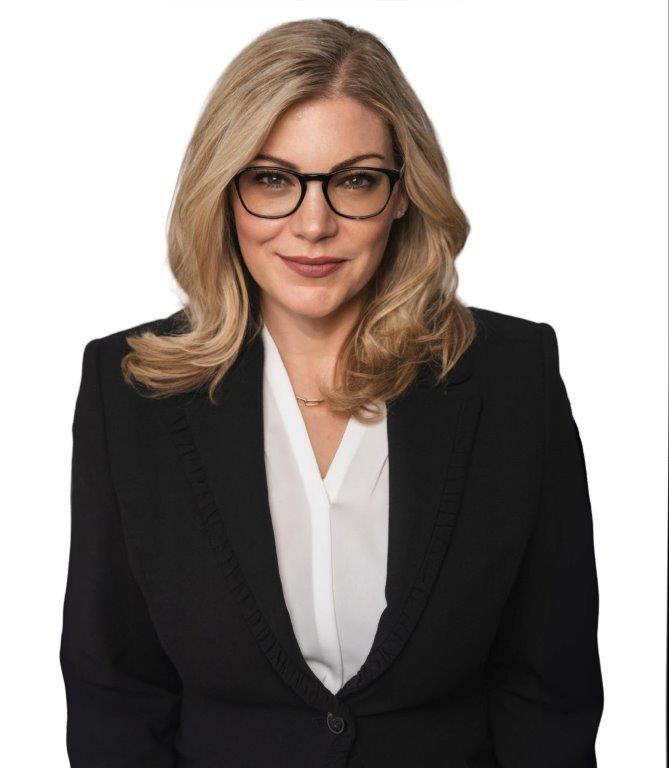
I am Rolf Claessen and my co-host Ken Suzan and I are welcoming you to episode 180 of our podcast IP Fridays! Today’s interview guest is Angela Dunning, who defends Midjourney and Meta, and explains where AI copyright litigation in the US stands and where it is heading.
Profile of Angela Dunning: https://www.clearygottlieb.com/professionals/angela-l-dunning
But before we hear the interview, I have news for you!
On 19 October 2026, the US Supreme Court declined to hear Google’s appeal in Google v. VirtaMove. Google, backed by the computer and automotive industries, wanted to end the Patent Trial and Appeal Board’s practice of shielding older patents based on “settled expectations.” According to the amici, this practice led to the denial of 201 review petitions between June and October 2025. The Court followed the Solicitor General’s recommendation.
On 22 October 2026, the EUIPO and the European Commission published their IP enforcement report. In 2025, authorities seized more than 196 million counterfeit items worth €6.3 billion, 67 percent more than in 2024. Trademarks were the most frequently infringed right at 57 percent, followed by designs at 7 percent. By value of goods detained at the EU border, Germany ranked second behind Spain.
On 5 October 2026, Italian Prime Minister Giorgia Meloni filed a four-second recording of her voice saying “Io sono Giorgia Meloni” as a sound mark with the EUIPO. She wants to protect herself against AI voice clones and deepfakes. The application covers downloadable multimedia content and the organization of political rallies, among other things, and is currently under examination.
On 7 October 2026, the District Court of The Hague barred MSD from selling its subcutaneous cancer therapy Keytruda in eight European countries, including Belgium, France and Italy. The ruling came at the request of Halozyme Therapeutics. The court held patent EP 2 797 622 valid and infringed, even though MSD itself had started the proceedings with an action for a declaration of non-infringement.
On 2 October 2026, it emerged that Moderna has sued BioNTech and Pfizer over the vaccine Comirnaty before the UPC Local Division Hamburg (UPC-CFI-0003215/2026). According to JUVE Patent, it is the division’s first major life sciences case in a long time. Moderna relies on EP 3 981 437, after EPO Board of Appeal 3.3.08 revoked its core patent EP 3 590 949 for added matter in mid-September. Moderna is seeking damages rather than a sales ban.
On 28 September 2026, the US Senate Subcommittee on Intellectual Property questioned USPTO Director John Squires. The hearing focused on two topics: the Office’s authority to set its own fees, which expires on 12 December 2026, and the planned overhaul of proceedings before the Patent Trial and Appeal Board. Squires said he is considering returning merits decisions to PTAB panels.
Generative AI on Trial: Angela Dunning on Fair Use, Trade Dress and a Monkey Selfie
More than 140 copyright lawsuits against AI developers are pending in the United States, and the first substantive rulings point toward fair use for training. In the latest episode of IP Fridays, my co-host Ken Suzan spoke with Angela Dunning, one of the lawyers defending those developers, about what courts have decided so far, which claims are still open and why she considers a trade dress claim over art styles a real risk for artists themselves.
Angela is a partner at Cleary Gottlieb in Silicon Valley. Her practice covers generative AI, copyright, trademark, technology and contract disputes, and Chambers ranks her for it. She has tried numerous cases to jury verdicts and won published IP appeals before the Ninth Circuit. In 2008 she worked as an assistant district attorney in San Francisco under then District Attorney Kamala Harris, and today she also teaches trademark law at UC Berkeley School of Law. She represents Midjourney and Meta in some of the most closely watched AI copyright cases in the country.
How a monkey led to the first AI training lawsuit
Angela’s path into AI litigation started about ten years ago with a crested macaque named Naruto. The monkey, from Sulawesi in Indonesia, had taken photographs of himself with a wildlife photographer’s camera. Those “monkey selfies” were later published through the self-publishing platform Blurb, Angela’s client, and Naruto (represented by animal rights advocates) sued for copyright infringement.
The case was funny on the surface and serious underneath. It raised the question of whether a non-human can be an author and have standing to sue under the Copyright Act. Angela knew even then that the answer would matter for generative AI, so her team paid close attention to how the human authorship requirement was framed. As she put it, losing to a monkey would have meant looking for a new job. The court held that copyright requires a human author, and the U.S. Copyright Office still cites that decision when it rejects registrations for AI-generated material.
The case also put Angela on the radar of AI developers. Since January 2023 she has defended Midjourney in Andersen, the first copyright class action in the United States aimed at the training of AI models. That case is moving toward the close of expert discovery and summary judgment within the next six to nine months. She also defends Meta in several putative class actions and direct actions over the training of its large language models, and she advises companies on the development and deployment of AI.
Training claims and output claims are two different fights
Angela splits the AI copyright litigation into two groups. Class actions against all the major developers attack the training of the models. In the putative class actions she handles, the plaintiffs don’t claim that any output is substantially similar to a work the model was trained on. The only question is whether copying works without permission to train a model that generates new, non-infringing content is a transformative fair use.
The second group consists of individual content owners who sue over training and over outputs. One example is a case against Midjourney brought by the owner of tens of thousands of registered copyrights in automobile photographs. Output claims bring back the classic questions of copyright litigation: whether the output is substantially similar to the original work and whether it harms the market for that work.
By Angela’s last count, more than 140 of these cases are pending across the United States. Despite that volume, courts have issued very few substantive rulings, and almost all of them at district court level. On the training question, no appellate court has spoken yet.
Kadrey v. Meta: training on books is fair use
Angela was part of the team that won an early summary judgment for Meta in Kadrey, a putative class action brought by book authors. Judge Chhabria held that Meta’s use of the plaintiffs’ books to train its Llama models was fair use as a matter of law.
On the first fair use factor, the purpose and character of the use, the court found the training of a model highly transformative. The decisive point came under the fourth factor, the effect on the market. The authors argued they had lost licensing fees for AI training. The court rejected that argument: an author has no claim to a license fee for a transformative use. A second route to market harm, infringing outputs, was closed because the plaintiffs never alleged that any output infringed their books.
Judge Chhabria then described a third theory himself, which he called market dilution. The idea is that AI models produce so much content that they flood the market and make it harder for authors to sell their own works. The plaintiffs had offered no evidence for that theory, so it couldn’t carry the day. It remains the theory that future plaintiffs will try to prove.
The second key holding concerns the source of the training data. The authors argued that Meta had obtained many books from so-called shadow libraries, websites that collected books without permission, and that this bad faith ruled out fair use. Judge Chhabria pointed to the Supreme Court’s decision in Google v. Oracle, which expressed doubt that good faith plays any role in fair use at all. Looking at the facts as a whole, he found that the source didn’t change the outcome: if a third party infringed the books when compiling its website, that doesn’t make Meta’s transformative use of them for training unfair. According to Angela, Kadrey was the first ruling to address this question in that way, and it conflicts with Judge Alsup’s ruling in Bartz v. Anthropic, issued a day and a half earlier.
Kadrey isn’t over: new plaintiffs, a trial date in April 2027
The summary judgment did not end the case. A separate claim remains on whether Meta distributed the works through the download method it allegedly used, and it is still being litigated. In the meantime, further authors and publishers have filed their own direct actions and competing class actions. Several of them were filed in New York and have now been transferred to California, where Judge Chhabria will hear them together with Kadrey.
These new plaintiffs are trying again to establish a training-based infringement claim, and this time they are preparing the evidence of market harm under the fourth factor that the Kadrey plaintiffs failed to deliver. Summary judgment proceedings are expected in the new year, and Judge Chhabria has set trial for April 2027. Anyone who wants to know whether market dilution will hold up as a theory of harm should watch this courtroom.
Can an art style be protected as trade dress?
The most unusual claim in the AI litigation landscape comes from trademark law. In Andersen, the artists accuse Midjourney of vicarious trade dress infringement under the Lanham Act. As far as Angela knows, Midjourney is the only AI company facing such a claim based on image outputs.
The claim is the plaintiffs’ second attempt to protect their style. Their original complaint relied on copyright, but copyright law excludes styles, ideas, concepts and facts and protects only their concrete expression. A right of publicity claim based on the same art styles failed as well, because the court held it preempted by the Copyright Act when ruling on Midjourney’s first motion to dismiss. In the amended complaint, the plaintiffs switched to trade dress. Their theory: when users prompt Midjourney to generate images in the style of a particular artist, the outputs infringe that artist’s trade dress, and Midjourney is secondarily liable.
Angela sees the greatest danger in how broadly the plaintiffs define their styles. One plaintiff claims trade dress in simple black-and-white cartoons, a style thousands of artists used long before her. Another paints realistic fantasy pictures of dragons and would effectively hold an exclusive right to that subject matter. If courts accepted styles like these as trade dress, every artist would have to wonder with every new work whether someone else could claim to have used that style first.
Trademark law adds further hurdles. The functionality doctrine bars trademark protection for functional features of a product, and the sole function of an artwork is its aesthetic. The plaintiffs also have to prove secondary meaning, meaning that the public associates the style with a single source. Angela’s strongest argument comes from art history: entire movements grew out of artists building on the styles of others. Nobody would claim that Picasso alone was allowed to paint in a Cubist style, but the trade dress theory points exactly in that direction. The claim will be tested at summary judgment.
The debate moves from training to outputs
With Kadrey and Bartz v. Anthropic, two courts have now held that using works to train a large language model is transformative and fair use. Angela expects the litigation focus to move to output claims. Major rights holders such as The New York Times and large publishing houses have sued over vast amounts of their own content and can assert output claims on a scale that individual authors can’t. On training, Angela sees the direction of travel heading toward fair use.
The Ninth Circuit has closed another line of attack. In Doe 1 v. GitHub, decided about a month before the recording, the court addressed claims under Section 1202 of the Digital Millennium Copyright Act. Plaintiffs had argued that AI outputs violate the DMCA because they don’t carry the copyright management information of the authors whose works were used in training. The Ninth Circuit held that the outputs of generative AI models are different works from the training material, even where they contain verbatim code or other content from it. A Section 1202 claim therefore doesn’t lie. Plaintiffs had raised this claim in many of the pending class actions, district courts had dismissed it almost everywhere, and after this decision it stays out.
The tone in the creative industries has changed too. Content owners who used to warn that AI would harm them now announce their own models. Film studios use AI in production, publishers build their own tools, and news organizations partner with AI developers or develop tools in-house. Angela describes the new consensus as acceptance: the technology is here to stay and helps people who create content work more effectively and faster.
A new category of lawsuits has grown over the past year that has nothing to do with intellectual property. These cases concern what Angela calls real-world harms: outputs that give users wrong information or lead them to harm themselves, intentionally or not. She expects the next wave of litigation to focus on what AI outputs actually contain and how people use these tools in everyday life.
A lot of work for human IP lawyers
When Ken asked where we will be in one or two years, Angela gave a clear answer: there will be plenty of work for human IP lawyers. She calls herself an optimist and wants every side at the table to find out together how this technology can serve people. AI already helps find diseases and develop cures, and it will create new forms of expression and new ways to tell stories, which is exactly what copyright law was meant to promote. If everyone works in good faith, keeps each other honest and uses the technology responsibly, she believes that a year from now some of today’s concerns will be resolved and new opportunities will have opened up for many people.
The full conversation with Angela Dunning is available in the current episode of IP Fridays. If your company uses generative AI for product designs, marketing images or code and you want to know what these US decisions mean for your own trademarks, designs and copyrights in Europe, contact me directly. One initial call is enough to find out where your company stands.
Here is the full transcript of the interview:
Kenneth Suzan: Thank you, Rolf. Our guest today on the IP Fridays podcast is Angela Dunning. Angela is a partner with Cleary Gottlieb and is based in their Silicon Valley office in California. Angela’s Chambers-recognized practice focuses on generative AI, copyright, trademark, technology, contract disputes, and other complex commercial litigation for the world’s top companies.
She has tried numerous cases to a jury verdict and has substantial experience in the federal appellate courts, including successful arguments before the U.S. Court of Appeals for the Ninth Circuit in high-profile published IP cases. In 2008, Angela served as an assistant district attorney in San Francisco under then District Attorney Kamala Harris. Angela teaches trademark law at UC Berkeley School of Law and is a thought leader and frequent speaker on AI and IP issues. Welcome, Angela, to the IP Fridays podcast.
Angela Dunning: It’s great to be here, Ken. Thanks so much for having me.
Kenneth Suzan: Angela, you are working on some of the most significant copyright and trademark cases of the day related to generative AI. How did you get involved?
Angela Dunning: Oh, well, it all goes back to a monkey, if you can believe it. About ten years ago, a crested macaque from Sulawesi, Indonesia, named Naruto filed a copyright lawsuit against my client Blurb, which was a self-publishing platform used by a human photographer to publish what have now become known as the monkey selfies: photographs that the macaques took of themselves when he was trying to film them in the wild in Indonesia.
You don’t get a case like that every day. It was a matter that comes around once in a lifetime. I had done some work for Blurb earlier, and when this came across my desk, I knew it would be fun, but also significant, because there was a key issue of human authorship and standing to assert a copyright claim. There was also, already at that time, some good literature on what the implications of that would be in the context of generative AI.
So I was very mindful, as we were litigating that case, of how the human authorship requirement should be described and how that would affect the potential authorship and copyrightability issues in the context of AI. We just didn’t know how quickly those questions would need to be answered. The resulting ruling in that case was that human authorship is required, and that decision continues to be cited by the U.S. Copyright Office today in its decisions around copyrightability.
It also brought me to the attention of some AI developers, including my client Midjourney, which was named in the first copyright class action lawsuit in the U.S. directed to the training of AI models. I’ve been working on that one since January of 2023, and it’s been a long, interesting road since then.
Kenneth Suzan: Yeah, that monkey selfie case has been around for a while. People have been talking about it for many years.
Angela Dunning: Yeah, you don’t have a client sued by a monkey every day. And it presented certain challenges, because if you win, you get the result everyone expects. If you lose to a monkey, you really need to find a new job. So I’m happy to say I lived to fight another day.
Kenneth Suzan: Yes. Now, Angela, what are some of the cases you’re currently working on that you can share with us?
Angela Dunning: Sure. It’s public record that I am representing Midjourney in the Andersen class action I just mentioned, which is continuing to be litigated. We’re headed toward the close of expert discovery and summary judgment in the coming six to nine months.
I’ve also been very privileged to work on a series of copyright actions, both putative class actions and direct actions, against Meta related to the training of its large language models. And I advise quite a few companies in the space on deployment and development. But those are the public matters that I can share.
Kenneth Suzan: And in your opinion, what are the most critical issues to be decided in those cases currently being litigated?
Angela Dunning: Across the spectrum of generative AI copyright litigation, the central issue is obviously going to be fair use: whether it constitutes a transformative fair use to train on copyrighted materials without authorization to make a model that can generate new and non-infringing content. In the putative class actions that I’m handling, the claims are directed to training. They’re not directed to outputs, and there is no claim that any output is substantially similar to any material on which the model was trained.
There’s a variety of additional cases, however. I have another action that’s been filed against Midjourney by the owner of tens of thousands of copyright registrations for automobile photographs, and there are output claims in that case. So what we’re seeing are class action lawsuits directed at all the major developers that are focused on training, and then individual content creators filing suits that are directed not only to training, but also to outputs.
Across the training cases, plainly, fair use is going to be an issue. When you start getting into outputs, there are all sorts of traditional questions at play. Is there substantial similarity between the outputs at issue and the copyrighted original works? Has there been any sort of harm to the market for those works?
We’ve seen no shortage of cases filed. I think at last count we’re up to over 140 cases pending across the country. Some rulings are around the corner in some of those cases, but there have been very few substantive rulings to date, and mostly only at the district court level. So there’s still a lot to be done.
Kenneth Suzan: Now, Angela, you represent Meta in the Kadrey putative class action, where the court issued an early summary judgment ruling of fair use. What did the court decide?
Angela Dunning: The judge in our case, Judge Chhabria, held in the Kadrey suit that Meta’s use of plaintiffs’ books to train its Llama models was fair use as a matter of law. The court found that training a model is highly transformative under the first factor of fair use, which looks at the nature of the use. It also found that plaintiffs had failed to come forward with any evidence that the market for their works had been harmed by Meta’s use of their works for training.
Plaintiffs had argued that the use of their works had deprived them of a licensing fee for training, and the court held that they were not entitled to a license for that use because it was transformative. There were no allegations, as I mentioned, that any of the outputs were infringing, so they couldn’t point to harm in that respect. The court then identified a third theory they could have pursued, which it called market dilution, the theory being that so much content is being generated using Meta’s models that it is flooding the market and making it hard for plaintiffs to sell their works into that market. But plaintiffs had come forward with no evidence to support that kind of new theory of factor four harm. So on balance, the court found that summary judgment for Meta was warranted as a matter of law.
There was also another important holding in the case, which conflicts with one that Judge Alsup reached in Bartz v. Anthropic just a day and a half earlier: that the source of the data downloaded for training didn’t affect the analysis. The plaintiffs in Kadrey had argued that the fact that Meta sourced many books from what they called shadow websites, which had compiled lots of books without permission, indicated that Meta’s use was made in bad faith and precluded a fair use finding.
Citing the Supreme Court’s statement in Google v. Oracle that there’s reason to doubt whether good faith has any role to play in fair use, and looking at the facts holistically, Judge Chhabria found that it didn’t move the needle in this case. The fact that some third party may have infringed plaintiffs’ works in compiling their website didn’t mean that Meta’s transformative use of those materials to train a model wasn’t fair. That was a significant ruling, and really the first to address that issue in that way.
Kenneth Suzan: And what’s the current status of the Kadrey case following the summary judgment ruling?
Angela Dunning: There was a separate claim with respect to the potential distribution of those works through the download method that Meta was alleged to have used, and that claim has proceeded. The Kadrey case has since been related to a series of additional suits. A number of authors and publishers have filed either direct claims or competing copyright class actions. Several of those were filed in New York and, after briefing, have recently been ordered transferred to California to be related and heard by Judge Chhabria as well.
So Kadrey is proceeding alongside other cases that are trying anew to establish a training-based copyright infringement claim. Plaintiffs in those cases are trying their hand at making the factor four market harm showing that the Kadrey plaintiffs were unable to make. There’s a lot going on. Summary judgment [is expected] in the new year, and Judge Chhabria just set trial for April of 2027.
Kenneth Suzan: Interesting. I’m sure we’ll be tracking that quite closely in the coming year. Let’s shift gears now, Angela, and talk about trademarks. Are you seeing any interesting trademark issues arising in your cases?
Angela Dunning: Yes, I think there’s a really interesting Lanham Act claim in the Andersen class action we’re defending for Midjourney. It’s the only company I’m aware of that is facing a vicarious trade dress infringement claim based on image outputs.
In their original complaint, the plaintiffs had asserted a copyright claim based on use of their art style, and style is not protectable under copyright law. Style, facts, ideas and concepts are by law excluded from copyright protection, which extends only to the expression of an idea or fact. They had also asserted a right of publicity claim premised on use of their art style, and that claim was deemed preempted by the Copyright Act in the first order on our motion to dismiss.
So in lieu of those claims, plaintiffs added a claim for vicarious trade dress infringement in the amended complaint. The theory is that when users prompt Midjourney’s platform to generate images [in the style] of particular artists, the outputs necessarily infringe those artists’ trade dress, and that Midjourney should be held secondarily liable for this.
There are a number of problems with that theory. The most obvious is that the plaintiffs’ claimed art styles are so broad and amorphous as to create some real risk, frankly, to artists themselves, should those be found to constitute protectable trade dress. One of the plaintiffs asserts trade dress in, basically, simple black-and-white cartoons. That describes an art style used by thousands of artists, long before she used it. Another plaintiff paints fantasy paintings of dragons. Again, he’s not the first to do that and won’t be the last.
The notion that he and he alone should be able to paint realistic paintings of dragons should be cause for concern for all artists, who would then need to be looking over their shoulder on every work they ever create to see if somebody might say they used that art style first and that it somehow points to them.
I think there’s also a really interesting functionality issue, Ken, because an artwork’s sole function is its aesthetic. If you can extend trademark protection to what is in effect a functional attribute of a product, that creates real issues. And there are loads of other interesting trademark issues. There’s a problem with secondary meaning and whether plaintiffs will be able to establish it.
But the big concern is what this means. We have whole art movements premised on artists building on styles introduced by others, even styles with which those artists are indelibly connected: Picasso and Cubism, for instance. Nobody would dare suggest that Picasso, and Picasso alone, is entitled to paint in a Cubist style. But to some extent, that is what plaintiffs are asserting in this case. We will see how those claims resolve as we make our way through summary judgment.
Kenneth Suzan: Thanks so much, Angela. We’re coming near the end of our podcast. Final question: have you observed any shift in the conversation around generative AI?
Angela Dunning: Yes, I think that has absolutely occurred. For years now, a huge focus has been on the copyright claims. Now, with two decisions behind us, in Kadrey and in Bartz v. Anthropic, holding that the use of materials for training a large language model is transformative and fair use, I think some of the focus has shifted to the cases asserting output-based claims.
We have major content creators and owners like The New York Times, major publishing houses and others that have filed lawsuits over large swaths of content they own, where they can assert, and are asserting, output-based claims. I think we’re going to see more focus there in the litigation, as the direction of travel on the training-based claims is toward fair use.
We also saw an important decision earlier this year out of the Ninth Circuit on another flavor of copyright claim under the Digital Millennium Copyright Act: the claim that outputs of AI models that do not include copyright management information for the authors whose works were used for training violate Section 1202 of the DMCA. The court held in Doe 1 v. GitHub, just about a month ago now, that the outputs of generative AI models are in fact different works from those on which the model was trained, even if they incorporate verbatim code or other content from the training material, and that a claim will not lie for those works not including the copyright management information of the authors of the training materials.
That claim had been asserted in numerous of the currently pending copyright class actions and had been rejected and dismissed in almost all of those cases. It will remain out.
Then, just in terms of the conversation, you have the major content creators whose presentations are shifting from “AI is bad and this is going to harm us” to “we’re going to build our own models.” Studios are using it, of course, to aid in the creation of film. You have publishing houses that are building, and news organizations that are partnering with developers or developing tools in-house. So I think there has been a shift toward acceptance that the technology is here, that it has tremendous potential to help those who are creating content do so more effectively and more quickly, and that these are powerful tools that are here to stay.
Over the last year or so, we have also seen a focus away from the IP-related issues toward what I would call real-world harms: claims that the outputs are harming users, providing faulty information, or leading users to harm themselves, either intentionally or unintentionally. So as we sit back and look at what is likely still to come down the pike, we’re going to see a focus on what the outputs actually consist of and how people are interacting with these tools in everyday life.
Kenneth Suzan: Angela, this is fantastic, and I really appreciate you sharing your insights into the litigation that’s going on. Where do you think we’ll be a year or two from now? More of the same, or some new things down the pike?
Angela Dunning: Well, look, I think there’s going to be an awful lot of work for human IP lawyers to do over the next few years. I don’t see that going anywhere. And I am a big believer in all of us coming together, and that means every constituency, from every perspective, to figure out how to make this powerful, really incredible new technology work for us as human beings.
I’m an optimist by nature, Ken. I stay on top of the news, and I am aware that there are real challenges. But I think we’ve got to keep talking about it, because this technology already is helping us find new diseases and also new cures. It’s going to help us create new expression. It’s going to let us tell stories in new ways, which is, after all, what copyright law was meant to promote.
If we all work together in good faith to keep everybody honest, but also to harness the power of this technology and get it right, I’m really hopeful that a year from now we’ll have mastered some of the things we’re concerned about and opened up new opportunities for lots of people.
Kenneth Suzan: Thank you, Angela, so much for spending time with us on the IP Fridays podcast.
Angela Dunning: Oh, thanks a lot for having me. It was great to be with you. Thank you, everybody.